


Introduction
Wondering whether you could be pregnant can bring a lot of questions, especially when you start noticing changes in your body. Some people notice symptoms early, while others may have very few or no noticeable symptoms during the first weeks.
Common early pregnancy symptoms can include a missed period, tiredness, nausea, breast tenderness, frequent urination, changes in taste or smell, and changes in appetite. However, many of these symptoms can also occur for other reasons, so symptoms alone cannot confirm pregnancy.
This guide explains some of the common signs, when they may appear, how to confirm pregnancy, and which symptoms should receive prompt medical attention.
Important: This article provides general health information and is not a substitute for advice from a doctor, midwife, or other qualified healthcare professional.
Quick Highlights
- A missed period is often one of the earliest noticeable signs of pregnancy.
- Early pregnancy symptoms commonly begin around 4–6 weeks, although timing varies.
- Nausea can happen at any time of day, not just in the morning.
- Breast tenderness and unusual tiredness are common early symptoms.
- Some people experience spotting or mild cramping.
- Having no symptoms does not necessarily mean you are not pregnant.
- A pregnancy test is a better way to check than relying on symptoms alone.
- Heavy bleeding, severe pain, or other concerning symptoms should be medically assessed.
What Are Early Pregnancy Symptoms?
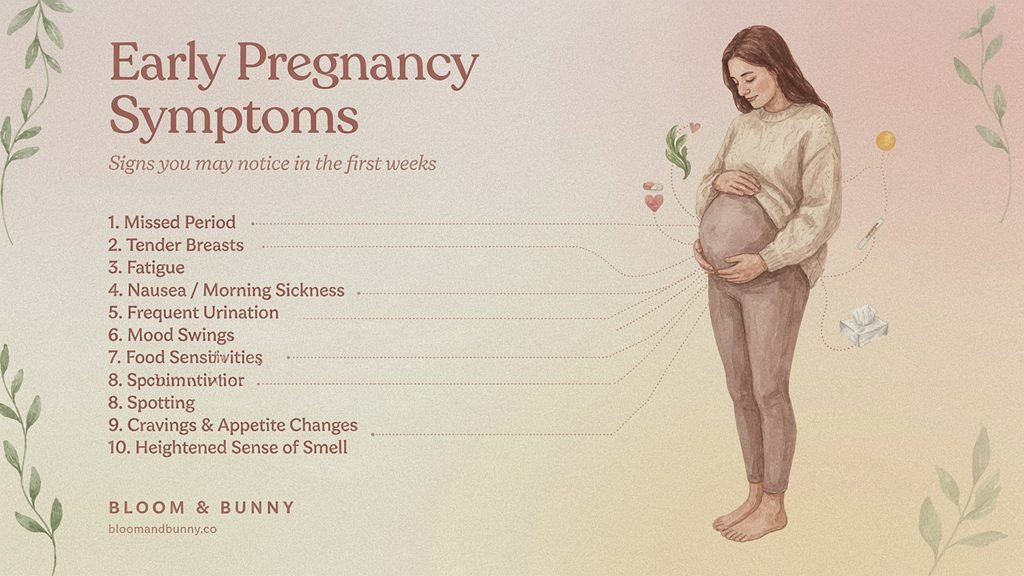
Early pregnancy symptoms are physical or emotional changes that may occur after conception as pregnancy-related hormonal changes begin.
The experience is different for everyone. Some people notice several symptoms, while others may notice only a missed period or no obvious changes at all. The NHS notes that early signs commonly appear around 4 to 6 weeks of pregnancy, although individual experiences vary.
It is also important to remember that many early pregnancy symptoms can resemble symptoms that occur before a menstrual period.
For that reason, symptoms can provide a reason to consider taking a pregnancy test, but they do not prove pregnancy on their own.
1. Missed Period
A missed period is one of the most commonly recognized early signs of pregnancy.
If your menstrual cycle is usually regular and your period does not arrive when expected, pregnancy is one possible explanation.
However, a late or missed period can happen for other reasons too, including changes in stress, weight, exercise, hormones, illness, or menstrual-cycle patterns.
If pregnancy is possible, taking a pregnancy test can provide more useful information than relying on symptoms alone.
2. Breast Tenderness or Soreness
Hormonal changes during early pregnancy can cause the breasts to feel tender, sore, swollen, or heavier.
Some people notice that their breasts feel similar to how they do before a period, while others notice a different sensation.
Breast changes can occur during early pregnancy, but breast tenderness by itself does not confirm pregnancy.
3. Feeling Very Tired
Unusual tiredness is another common early pregnancy symptom.
You may feel exhausted even after your normal daily activities or feel that you need more rest than usual.
Fatigue can have many causes, including lack of sleep, stress, illness, lifestyle changes, or other health conditions. If pregnancy is possible and tiredness occurs alongside other symptoms, consider taking a pregnancy test.
4. Nausea or Morning Sickness
Nausea is often associated with pregnancy and is commonly called morning sickness.
Despite the name, nausea and vomiting can happen at any time of day or night.
Some people experience mild nausea, while others experience more significant symptoms.
If vomiting becomes severe or you cannot keep fluids down, speak with a healthcare professional. Severe vomiting during pregnancy may require medical treatment.
5. Increased Sensitivity to Smells
Some people notice that certain smells suddenly become much stronger or more unpleasant.
Cooking smells, perfumes, foods, or other everyday odors may trigger nausea or simply seem different.
A heightened sense of smell is among the symptoms that can occur in early pregnancy.
However, changes in smell sensitivity can also have causes unrelated to pregnancy.
6. Food Cravings or Food Aversions
You may suddenly want foods you normally do not eat or lose interest in foods you usually enjoy.
Changes in food preferences and cravings can occur during early pregnancy.
If you experience unusual cravings for non-food substances, such as dirt or other materials, speak with a healthcare professional because this can sometimes be associated with pica or nutritional deficiencies.
7. Frequent Urination
Needing to urinate more often than usual can occur during early pregnancy.
You may notice that you are making more bathroom trips even though your fluid intake has not changed significantly.
Frequent urination can have several causes, however. If urination is painful or accompanied by other symptoms, speak with a healthcare professional because a urinary infection may be another possibility.
8. Mild Cramping
Some people experience mild cramping that feels similar to menstrual cramps during early pregnancy.
Mild cramping can occur during the early stages, but abdominal or pelvic pain should not automatically be assumed to be a normal pregnancy symptom.
If pain becomes severe, persistent, or concerning, seek medical advice.
9. Light Spotting
Some people notice light spotting around the time their period would normally be expected.
Light spotting can occur in early pregnancy, but bleeding during pregnancy should not simply be ignored. The NHS recommends seeking medical advice if you are worried about bleeding.
Heavy bleeding or bleeding accompanied by significant pain requires prompt medical assessment.
10. More Vaginal Discharge
An increase in vaginal discharge can occur during pregnancy.
Normal pregnancy discharge is generally not associated with soreness or irritation. Changes in color, smell, or other unusual symptoms should be discussed with a healthcare professional.
If you notice itching, pain, an unusual odor, or significant changes in discharge, it may be worth getting checked.
11. Metallic Taste in the Mouth
Some people notice a strange or metallic taste during early pregnancy.
This can make certain foods or drinks taste different and may occur alongside changes in smell and food preferences.
A metallic taste is recognized among possible early pregnancy symptoms, although it does not occur in everyone.
12. Mood Changes
Hormonal changes can contribute to emotional changes during pregnancy.
You may feel more emotional, irritable, sensitive, or experience changes in your mood.
Mood changes can also happen before a period or because of stress, sleep problems, and other factors, so they should not be considered proof of pregnancy.
When Do Early Pregnancy Symptoms Start?
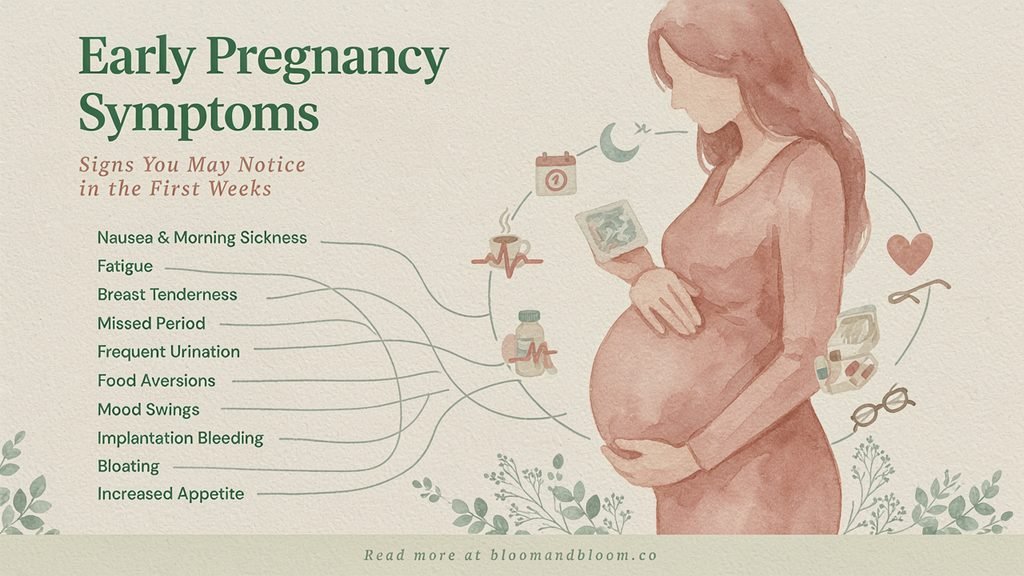
There is no single timeline that applies to everyone.
According to the NHS, pregnancy symptoms and early signs commonly begin around 4 to 6 weeks of pregnancy.
Some symptoms can appear around the time of a missed period, while others may develop later.
At around 4 weeks, some people may have no symptoms at all. The NHS also notes that pregnancy can be present even when noticeable symptoms are absent.
Can You Be Pregnant Without Symptoms?
Yes.
Not everyone experiences noticeable early pregnancy symptoms. Some people may feel completely normal during the first weeks.
The absence of nausea, breast tenderness, fatigue, or other symptoms does not automatically mean that pregnancy is impossible.
If pregnancy is possible, a pregnancy test is a more reliable way to check than trying to interpret symptoms.
How Can You Confirm Pregnancy?
If you think you may be pregnant, consider taking a pregnancy test.
Home pregnancy tests are widely available, and healthcare professionals can also provide pregnancy testing and advice.
If your test is positive, contact an appropriate healthcare professional to discuss pregnancy care and next steps.
If the result is negative but your period remains absent and you still think you may be pregnant, follow the instructions on the test and consider speaking with a healthcare professional.
Early Pregnancy Symptoms vs. PMS
Some early pregnancy symptoms can look very similar to premenstrual symptoms.
For example, both can involve:
- Breast tenderness.
- Mood changes.
- Tiredness.
- Bloating.
- Mild cramping.
- Changes in appetite.
This overlap is one reason symptoms alone cannot reliably tell you whether you are pregnant.
If pregnancy is possible, testing is a more useful next step than trying to distinguish every symptom.
When Should You Seek Medical Advice?
Some symptoms during early pregnancy need medical attention.
Contact a healthcare professional if you experience concerning bleeding, significant abdominal or pelvic pain, or symptoms that worry you.
Seek urgent medical help for severe symptoms, particularly severe pain, heavy bleeding, fainting, or other symptoms that could indicate a serious problem.
Severe vomiting that makes it difficult to keep fluids down should also be medically assessed.
If you are unsure whether a symptom is normal, it is safer to discuss it with a qualified healthcare professional rather than relying on an online article.
Frequently Asked Questions
What are the first signs of pregnancy?
A missed period, unusual tiredness, breast tenderness, nausea, increased urination, changes in smell or taste, food cravings or aversions, and mood changes can occur during early pregnancy.
How early can pregnancy symptoms start?
Early symptoms commonly begin around 4 to 6 weeks of pregnancy, although the timing varies from person to person.
Can I be pregnant without having symptoms?
Yes. Some people have few or no noticeable symptoms during early pregnancy.
Is nausea always a sign of pregnancy?
No. Nausea can have many causes. It is common during early pregnancy, but nausea alone cannot confirm pregnancy.
Is light spotting always a problem?
Light spotting can occur during early pregnancy, but bleeding should still be discussed with a healthcare professional if you are concerned. Heavy bleeding or significant pain needs prompt medical attention.
What is the most reliable way to know if I am pregnant?
A pregnancy test is more reliable than trying to determine pregnancy from symptoms alone. If you have questions about the result or your symptoms, speak with a healthcare professional.
Conclusion
Understanding early pregnancy symptoms can help you recognize changes in your body, but symptoms are different for everyone. A missed period, nausea, tiredness, breast tenderness, frequent urination, food changes, and sensitivity to smells are among the possible early signs.
Remember that some people have very few symptoms, while others experience several. Symptoms can also overlap with PMS and other conditions, so they cannot confirm pregnancy by themselves.
If pregnancy is possible, consider taking a pregnancy test and speaking with a healthcare professional about the next steps. And if you experience heavy bleeding, severe pain, severe vomiting, or other worrying symptoms, seek medical advice promptly.